
 When a Headline Becomes a Verdict: Hindustan Times and the Politics of “Forged Peace”
By Ahmed Sohail Siddiqui
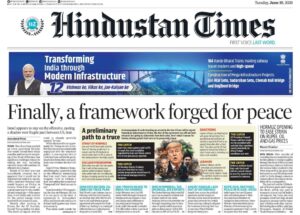
The front page of a newspaper is more than a collection of words. It is a statement of editorial judgment. It shapes public perception before a reader reaches the first paragraph. That is why the June 16, 2026 Mumbai edition of Hindustan Times deserves careful examination.
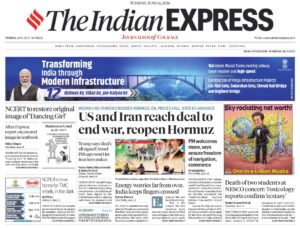
While several newspapers reported the emerging U.S.–Iran agreement as a significant diplomatic breakthrough, Hindustan Times chose a strikingly different banner headline:
“Finally, a framework forged for peace.”
At first glance, the phrase appears positive. Yet the word “forged” carries a dual meaning in English. It can mean carefully created or fashioned through effort, but it can also mean faked, counterfeit, or artificially manufactured. In a geopolitical context, where every word is weighed, the headline raises important questions about editorial framing and the narrative being presented to readers.
A Tale of Two Front Pages
The contrast becomes even sharper when compared with another major national newspaper.
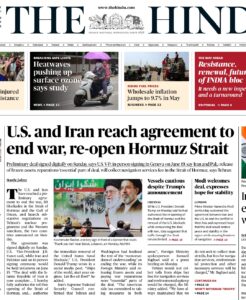
The Hindu reported:
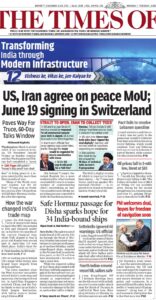
“U.S. and Iran reach agreement to end war, re-open Hormuz Strait.”
The emphasis was on the agreement itself, the reopening of maritime routes, and the potential end of hostilities.
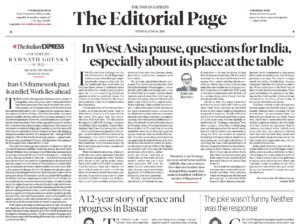
By contrast, Hindustan Times framed the development as a “framework” rather than a settlement, and prominently highlighted concerns, conditions, and uncertainties surrounding the deal. This approach mirrors commentary published by the newspaper’s analysts, who argued that the arrangement is merely a temporary truce rather than a definitive peace agreement.
The Power of Framing
Media scholars have long argued that journalism does not merely report events—it frames them.
When readers see:
“Agreement to End War”
they perceive closure, optimism, and diplomatic success.
When they see:
“Framework Forged for Peace”
they are invited to think of negotiation, uncertainty, and perhaps even a peace process whose authenticity remains untested.
Neither framing is necessarily false. The issue is how language subtly guides interpretation.
Why the Skepticism?
There are legitimate reasons for caution.
Reports indicate that the U.S.–Iran understanding remains preliminary and is expected to be followed by further negotiations concerning sanctions, maritime security, and Iran’s nuclear programme. Analysts have noted that many core disputes remain unresolved and that the success of the arrangement depends on future implementation.
From that perspective, Hindustan Times may simply be warning readers against premature celebration.
Yet critics could argue that the newspaper’s wording risks diminishing what is, at least diplomatically, a major de-escalation after months of conflict.
India’s Stake in the Story
For India, the significance of the agreement extends far beyond diplomacy.
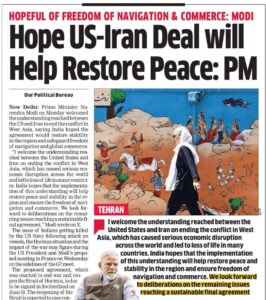
The Strait of Hormuz remains one of the world’s most important energy corridors. Any reduction in conflict there affects oil prices, shipping costs, inflation, and energy security. Prime Minister Narendra Modi publicly welcomed the understanding between Washington and Tehran, expressing hope that it would restore stability and freedom of navigation in the region.
Seen from New Delhi, even an imperfect truce has enormous economic value.
This makes the editorial framing of the story particularly consequential. Is the deal being presented as a step toward peace, or as an arrangement likely to unravel?
The Larger Question
The debate is not really about one headline.
It is about the responsibility of national newspapers in moments of international crisis.
Should newspapers emphasize hope when diplomacy succeeds?
Should they emphasize risks and unresolved issues?
Or should they attempt to balance both without allowing a single word to tilt public perception?
The Hindustan Times headline demonstrates how a single term can shape an entire narrative. To some readers, “forged for peace” suggests a carefully crafted diplomatic achievement. To others, it may evoke the image of a peace manufactured by powerful states and therefore lacking authenticity.
Conclusion
Whether intentional or not, the Mumbai edition of Hindustan Times transformed a diplomatic development into an editorial conversation. The choice of the word “forged” ensured that readers would not simply consume the news; they would interpret it.
In an era where wars are fought not only on battlefields but also through narratives, headlines matter. They influence how history is remembered.
The question readers must ask is simple:
Was this headline celebrating peace, questioning peace, or quietly doing both at the same time?
The answer may reveal as much about contemporary media as it does about the U.S.–Iran agreement itself.
********