
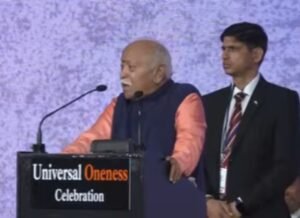
 MOHAN BHAGWAT AT MADISON SQUARE GARDEN
“A Hindu Who Wants Muslims Out of India Is Not a True Hindu” — A New Dawn of Reconciliation or an RSS Global Image Makeover?
What did the Urdu press report, what did it omit, and what questions did it fail to ask?
By Ahmad Sohail Siddiqui
On August 29, 2026, RSS chief Mohan Bhagwat delivered an address at Madison Square Garden in New York in which he spoke about Hindu-Muslim relations, India’s pluralistic identity and the unity of humanity.
His most striking statement was that:
If a Hindu believes that there should be no place for Muslims in India, he cannot be considered a true Hindu.

That statement became the central headline in Indian and Muslim media. The Times of India similarly highlighted Bhagwat’s assertion that there was no place in Hindu thought for excluding Muslims, while other Indian reports emphasised his message of diversity and social harmony.
But the real journalistic question is not merely:
What did Bhagwat say?
The more important question is:
Can Bhagwat’s statement be accepted at face value when examined against the RSS’s history, ideology and political record?
And this is precisely where Urdu Muslim journalism has, so far, not gone far enough.
—
1. The First Picture in the Urdu Muslim Press: The Statement Became the Headline, the Background Became Secondary
The Indian Urdu newspaper Inquilab prominently reported Bhagwat’s statement under the headline:
“New York: A Hindu Who Thinks Muslims Should Be Expelled From India Cannot Remain a Hindu — Mohan Bhagwat”
Its coverage referred to religious harmony, human unity, India’s pluralistic identity and the participation of representatives of different faiths.
The report is important, but it raises another question:
Is merely reproducing Bhagwat’s statement enough?
If the RSS chief says in America that Muslims have a legitimate place in India, a serious investigative journalist should immediately ask:
– What does the RSS’s historical ideological literature say about Muslims?
– What has been the organisation’s relationship with the BJP?
– Does the RSS’s present political conduct reflect the same principle?
– Has the organisation consistently opposed anti-Muslim rhetoric?
– Does its conception of “Hindu Rashtra” provide Muslims with equal citizenship in political as well as cultural terms?
These questions have not yet received the prominence they deserve in Urdu reporting.
—
2. Yet Urdu Reporting Did Open Another Door
Urdu coverage did not completely ignore the controversy surrounding Bhagwat’s visit.
Reports also covered opposition to the New York event, Mayor Zohran Mamdani’s criticism, protests and the wider debate about RSS ideology and minority rights.
This creates two competing images:
Universal Oneness
versus
Questions about the RSS’s record on minorities.
That contradiction is the most important investigative dimension of the entire story.
—
3. The Pakistani Urdu Press: A Different Emphasis
Pakistani Urdu media placed greater emphasis on the controversy surrounding Bhagwat’s appearance.
Express reported Mayor Zohran Mamdani’s opposition to the event and described the RSS in the context of its ideological relationship with India’s ruling BJP.
The report also carried the RSS position that it considers itself a cultural organisation and rejects allegations of promoting violence or hostility against minorities.
This is significant because the Pakistani Urdu press often placed the RSS’s political and ideological background before Bhagwat’s conciliatory rhetoric.
But another question remains:
Did Pakistani Urdu media undertake a systematic historical fact-check of Bhagwat’s post-speech claims?
Based on the available reporting, not to the extent required for a comprehensive investigative story.
—
4. Millat Times: Important Background Was Raised
The Indian Muslim publication Millat Times highlighted criticism of the RSS from U.S. religious-freedom and minority-rights circles before Bhagwat’s visit.
Its reporting referred to allegations concerning minorities, including Muslims, Sikhs and Christians, while appropriately presenting these as allegations and criticisms rather than established judicial findings.
This was an important step because it placed Bhagwat’s “Universal Oneness” message alongside the controversies surrounding the organisation he leads.
—
5. Independent Urdu: The Global Image Question
Independent Urdu, reporting on the controversy through Reuters, also drew attention to the question of the RSS’s international image.
This raises a larger investigative hypothesis:
«Is Bhagwat’s international tour solely about the RSS centenary and diaspora outreach, or is it also part of an effort to rebuild the organisation’s global image?»
This is not a conclusion that should be presented as fact without evidence.
It is, however, a legitimate investigative question.
The international coverage strengthens the reason for asking it.
The Associated Press, for example, reported that Bhagwat’s planned New York appearance had generated protests, criticism and calls for sanctions, while supporters presented the event as an opportunity to promote dialogue and Indian civilisational values.
—
6. Did Any Muslim Newspaper Expose the “Real Face” of the RSS ?
The answer, at present, is: not completely.
But several Muslim and Urdu outlets have provided pieces of the puzzle.
There are three levels of coverage:
Level One — Reporting
“Bhagwat said Muslims belong in India.”
Level Two — Criticism
“The RSS faces allegations and criticism concerning religious minorities.”
Level Three — Investigation
“Has the RSS actually changed, or is it changing the way it presents itself to the world?”
Most Urdu Muslim coverage has reached the first two levels.
The third level remains largely unexplored.
—
7. Owaisi’s Response: “The Oldest Trick in the RSS Playbook”
AIMIM president Asaduddin Owaisi gave perhaps the sharpest political response.
He accused the RSS of using an old strategy: presenting an inclusive public image while its ideological history contains positions that critics consider exclusionary toward Muslims.
This is a political allegation, not an established fact.
But journalistically it raises an important question:
Is there a gap between the RSS’s present public language and its historical ideological literature?
That question should be answered by examining the RSS’s own primary documents.
—
8. The Most Dangerous Mistake: “The RSS Has Now Accepted Muslims”
That conclusion would be premature.
A single speech by the RSS chief cannot automatically erase the organisation’s historical ideological record.
But the opposite conclusion would also be premature:
“Bhagwat’s statement is a lie.”
That too requires evidence.
The journalist’s job is to examine:
Statement → History → Ideology → Organisation → Conduct → Consequences
All six must be examined together.
—
9. Bhagwat Has Given the RSS a Standard by Which It Can Now Be Judged
This is where the Madison Square Garden speech becomes particularly important.
Bhagwat has effectively established a moral test:
A Hindu who wants Muslims expelled from India is not a true Hindu.
That allows Muslims and minorities to ask:
What happens when someone associated with the Sangh advocates excluding Muslims?
Will the RSS condemn such statements?
Will the RSS intervene when Muslims face discrimination?
Will it defend equal citizenship for Muslims with the same clarity with which Bhagwat defended their place in India in New York?
If the answer is yes, the speech could represent a genuine ideological development.
If the answer is no, critics will have grounds to argue that the speech was primarily an exercise in international image management.
—
10. The Central Contradiction: “Universal Oneness” Versus “Hindu Rashtra”
Bhagwat’s New York address placed great emphasis on human unity, diversity, dialogue and the idea that different religious traditions can lead toward the same ultimate truth.
That creates a fundamental question:
If humanity is one, what exactly is the political and constitutional status of Muslims within the RSS’s conception of a “Hindu Rashtra”?
This question goes to the heart of the RSS worldview.
It cannot be answered merely through applause for one speech.
—
11. Kapil Sibal Raises the Same Question
Interestingly, this criticism has not come only from Muslim politicians.
Kapil Sibal criticised Bhagwat’s remarks in terms of the gap between statements abroad and conduct at home.
Urdu reporting also highlighted the formulation:
“Wise words abroad, silence at home.”
The argument is straightforward:
The test of pluralism is not what is said in New York. The test is what happens in India.
—
12. Has the Muslim Press Recognised an RSS “Image Makeover” ?
Partially.
The Economic Times described Bhagwat’s presentation as projecting a “conciliatory, reassuring RSS to a global audience.”
That phrase provides an important investigative lead.
If the RSS is simply explaining its genuine philosophy, there is nothing inherently problematic about presenting itself internationally.
But if the purpose is also to rehabilitate its global image, then another question arises:
Was Madison Square Garden a religious gathering, a diaspora outreach event, or an international public-relations exercise for the RSS?
The answer could conceivably be all three.
—
13. A Weakness in Pakistani Urdu Coverage
Pakistani Urdu reporting gave considerable attention to:
– RSS ideology;
– Zohran Mamdani’s opposition;
– protests;
– religious-freedom concerns;
– minority-rights allegations.
But there has been less systematic comparison between Bhagwat’s actual speech and the RSS’s historical ideological documents.
That is a major editorial gap.
—
14. The Same Weakness Exists in Indian Muslim Urdu Journalism
Indian Urdu newspapers gave prominent coverage to:
“A Hindu who wants Muslims out of India is not a true Hindu.”
But an investigative newspaper should go one step further:
«Which historical RSS statements does Bhagwat’s declaration confirm, and which does it contradict ?»
That question should be answered using the RSS’s own primary documents rather than political commentary.
—
15. The Direct Answer to the Question
Has any Muslim newspaper exposed the “real face” of the RSS?
Not fully, at least not yet.
But:
– Urdu outlets have reported Bhagwat’s statement;
– Muslim media have reported opposition to the RSS;
– Indian Muslim publications have highlighted the religious-freedom controversy;
– political critics such as Owaisi have challenged the sincerity of the message;
– international coverage has raised the possibility of an RSS global image-building campaign;
– and Muslim and interfaith organisations in America have explicitly argued that the RSS does not represent all Hindus.
What remains to be done is to connect these separate pieces into one documentary investigation.
—
THE REAL RSS TEST
A serious Muslim investigative newspaper should now construct an “RSS Truth Test” around six questions:
1. What does the RSS’s original ideological literature say?
Examine Golwalkar, Savarkar, RSS resolutions, official publications and contemporary RSS literature.
2. What is the status of Muslims under the concept of “Hindu Rashtra”?
Is equal citizenship explicitly guaranteed?
3. Has the RSS clearly and consistently supported equal citizenship for Muslims?
Not merely cultural acceptance, but political and constitutional equality.
4. What role have RSS-linked Muslim outreach organisations played?
Who created them? Who funds them? Who leads them? What political objectives do they pursue?
5. Does Bhagwat’s New York message correspond with RSS conduct in India?
Words versus deeds.
6. Has the RSS genuinely changed in 2026 — or merely changed how it presents itself to the world?
That is the central question.
—
CONCLUSION
Mohan Bhagwat’s Madison Square Garden speech presented the RSS in a new rhetorical frame:
Hinduism = human unity
Hindu Rashtra ≠ expulsion of Muslims
India = unity in diversity
Muslims = legitimate part of Bharat
The statement is significant and should not be dismissed.
But neither should a single speech be used to declare that the RSS has fundamentally transformed itself.
The real test will not take place at Madison Square Garden.
It will take place in India.
And perhaps the most appropriate headline for the next stage of this investigation is:
BHAGWAT ACCEPTED MUSLIMS IN NEW YORK — NOW WILL THE RSS PROVE THAT PROMISE IN INDIA ?
********
मैडिसन स्क्वायर गार्डन में मोहन भागवत
“जो मुसलमानों को भारत से बाहर करना चाहता है, वह सच्चा हिंदू नहीं” — मेल-मिलाप की नई सुबह या RSS का वैश्विक इमेज मेकओवर?
उर्दू प्रेस ने क्या देखा, क्या छिपाया और कौन से सवाल पूछने से बचा ?
अहमद सोहेल सिद्धीक़ी
29 अगस्त 2026 को न्यूयॉर्क के मैडिसन स्क्वायर गार्डन में RSS प्रमुख मोहन भागवत ने हिंदू-मुस्लिम संबंधों, भारत की बहुलतावादी पहचान और मानव एकता पर भाषण दिया।
उनका सबसे महत्वपूर्ण बयान था:
यदि कोई हिंदू यह सोचता है कि भारत में मुसलमानों के लिए कोई जगह नहीं होनी चाहिए, तो वह सच्चा हिंदू नहीं रह सकता।
यह बयान भारतीय और मुस्लिम मीडिया की प्रमुख सुर्खियों में रहा। Times of India ने भी इसी बात को प्रमुखता दी कि हिंदू विचारधारा में मुसलमानों को भारत से बाहर करने की कोई जगह नहीं है।
लेकिन असली पत्रकारिता का सवाल केवल यह नहीं है:
भागवत ने क्या कहा?
बड़ा सवाल यह है:
क्या RSS के इतिहास, विचारधारा और राजनीतिक रिकॉर्ड की रोशनी में भागवत के इस बयान को केवल उनके शब्दों के आधार पर स्वीकार किया जा सकता है?
यहीं पर उर्दू और मुस्लिम पत्रकारिता अभी तक उस गहराई तक नहीं पहुंची है जिसकी एक गंभीर खोजी रिपोर्ट में आवश्यकता है।
—
1. उर्दू मुस्लिम प्रेस की पहली तस्वीर: बयान सुर्खी बन गया, पृष्ठभूमि पीछे चली गई
भारतीय उर्दू अखबार इंकलाब ने भागवत के बयान को प्रमुखता से प्रकाशित किया:
“न्यूयॉर्क: मुसलमानों को भारत से निकालने की सोच रखने वाला हिंदू नहीं रह सकता — मोहन भागवत”
रिपोर्ट में धार्मिक सद्भाव, मानव एकता, भारत की बहुलतावादी पहचान और विभिन्न धर्मों के प्रतिनिधियों की भागीदारी का उल्लेख किया गया।
रिपोर्ट महत्वपूर्ण है, लेकिन इससे अगला सवाल पैदा होता है:
क्या केवल भागवत का बयान प्रकाशित कर देना पर्याप्त है?
यदि RSS प्रमुख अमेरिका में कहते हैं कि मुसलमानों के लिए भारत में जगह है, तो एक गंभीर खोजी पत्रकार को तुरंत पूछना चाहिए:
– RSS के ऐतिहासिक वैचारिक साहित्य में मुसलमानों के बारे में क्या कहा गया है?
– BJP के साथ RSS का संबंध क्या है?
– क्या RSS का वर्तमान राजनीतिक आचरण इसी सिद्धांत को दर्शाता है?
– क्या संगठन ने लगातार मुस्लिम विरोधी भाषा का विरोध किया है?
– RSS की “हिंदू राष्ट्र” की अवधारणा में मुसलमानों को सांस्कृतिक ही नहीं बल्कि राजनीतिक और संवैधानिक रूप से भी समान नागरिकता प्राप्त है?
इन सवालों को उर्दू मीडिया में अभी वह प्रमुखता नहीं मिली है जिसके वे हकदार हैं।
2. फिर भी उर्दू रिपोर्टिंग ने दूसरा दरवाजा खोला
उर्दू मीडिया ने भागवत की यात्रा से जुड़े विवाद को पूरी तरह नजरअंदाज नहीं किया।
न्यूयॉर्क कार्यक्रम का विरोध, मेयर जोहरान ममदानी की आपत्ति, प्रदर्शन तथा RSS की विचारधारा और अल्पसंख्यकों के अधिकारों से जुड़े सवाल भी रिपोर्ट किए गए।
इससे दो विरोधी तस्वीरें सामने आती हैं:
Universal Oneness — सार्वभौमिक एकता
बनाम
RSS के अल्पसंख्यकों संबंधी रिकॉर्ड पर सवाल।
यही विरोधाभास इस पूरी कहानी का सबसे महत्वपूर्ण खोजी पहलू है।
—
3. पाकिस्तानी उर्दू प्रेस: अलग प्राथमिकता
पाकिस्तानी उर्दू मीडिया ने भागवत के कार्यक्रम से जुड़े विवाद को अधिक प्रमुखता दी।
एक्सप्रेस ने न्यूयॉर्क के मेयर जोहरान ममदानी के विरोध को प्रमुखता से रिपोर्ट किया और RSS को BJP के वैचारिक संबंधों के संदर्भ में प्रस्तुत किया।
साथ ही RSS का पक्ष भी दिया गया कि वह स्वयं को सांस्कृतिक संगठन मानती है और अल्पसंख्यकों के खिलाफ हिंसा या घृणा को बढ़ावा देने के आरोपों को खारिज करती है।
इस दृष्टिकोण में भागवत के मेल-मिलाप वाले शब्दों से पहले RSS की राजनीतिक और वैचारिक पृष्ठभूमि सामने आती है।
लेकिन एक सवाल फिर भी बाकी है:
क्या पाकिस्तानी उर्दू मीडिया ने भागवत के भाषण के बाद RSS के दावों का व्यवस्थित ऐतिहासिक fact-check किया?
उपलब्ध रिपोर्टिंग के आधार पर जवाब है:
अभी उस स्तर पर नहीं, जिसकी एक पूर्ण खोजी रिपोर्ट के लिए आवश्यकता है।
—
4. मिल्लत टाइम्स: महत्वपूर्ण पृष्ठभूमि सामने आई
भारतीय मुस्लिम प्रकाशन मिल्लत टाइम्स ने भागवत की अमेरिका यात्रा से पहले RSS के खिलाफ अमेरिकी धार्मिक स्वतंत्रता और अल्पसंख्यक अधिकारों से जुड़े विरोध को प्रमुखता दी।
रिपोर्ट में मुसलमानों, सिखों और ईसाइयों सहित धार्मिक अल्पसंख्यकों से जुड़े आरोपों का उल्लेख किया गया, लेकिन उन्हें आरोप और आलोचनाएं ही बताया गया, न्यायिक रूप से सिद्ध तथ्य नहीं।
यह महत्वपूर्ण था क्योंकि इससे भागवत के “Universal Oneness” संदेश को RSS से जुड़े विवादों के समान फ्रेम में देखा गया।
—
5. Independent Urdu: RSS की वैश्विक छवि का सवाल
Independent Urdu ने Reuters के हवाले से RSS की अंतरराष्ट्रीय छवि से जुड़े सवालों को भी सामने रखा।
इससे एक बड़ा खोजी सवाल पैदा होता है:
«क्या भागवत की अंतरराष्ट्रीय यात्रा केवल RSS के शताब्दी समारोह और प्रवासी भारतीयों से संपर्क का हिस्सा है, या RSS की वैश्विक छवि को फिर से बनाने की कोशिश भी है?»
बिना प्रमाण के इसे निष्कर्ष के रूप में प्रस्तुत नहीं किया जाना चाहिए।
लेकिन यह एक वैध खोजी सवाल जरूर है।
अंतरराष्ट्रीय मीडिया की रिपोर्टिंग इस सवाल को और प्रासंगिक बनाती है। Associated Press ने उदाहरण के लिए बताया कि न्यूयॉर्क में भागवत के कार्यक्रम को विरोध, आलोचना और प्रतिबंधों की मांग का सामना करना पड़ा, जबकि समर्थकों ने इसे संवाद और भारतीय सभ्यतागत मूल्यों को सामने रखने का अवसर बताया।
—
6. क्या किसी मुस्लिम अखबार ने RSS का “असली चेहरा” उजागर किया?
फिलहाल जवाब है: पूरी तरह नहीं।
लेकिन कई मुस्लिम और उर्दू माध्यमों ने इस पहेली के अलग-अलग हिस्से जरूर सामने रखे हैं।
तीन स्तर दिखाई देते हैं:
पहला स्तर — रिपोर्टिंग
“भागवत ने कहा कि मुसलमान भारत का हिस्सा हैं।”
दूसरा स्तर — आलोचना
“RSS पर धार्मिक अल्पसंख्यकों के संबंध में असहिष्णुता के आरोप और आलोचनाएं हैं।”
तीसरा स्तर — खोजी पत्रकारिता
“क्या RSS वास्तव में बदल चुकी है, या उसने केवल दुनिया के सामने खुद को पेश करने का तरीका बदला है ?”
अधिकांश उर्दू मुस्लिम रिपोर्टिंग पहले दो स्तरों तक पहुंची है।
तीसरा स्तर अभी काफी हद तक अनछुआ है।
—
7. ओवैसी की प्रतिक्रिया: “RSS की पुरानी चाल”
AIMIM अध्यक्ष असदुद्दीन ओवैसी ने सबसे तीखी राजनीतिक प्रतिक्रिया दी।
उन्होंने RSS पर आरोप लगाया कि वह सार्वजनिक रूप से समावेशी छवि प्रस्तुत करने की पुरानी रणनीति अपनाती है, जबकि उसके वैचारिक इतिहास में ऐसे विचार मौजूद रहे हैं जिन्हें आलोचक मुसलमानों के प्रति बहिष्कारी मानते हैं।
यह एक राजनीतिक आरोप है, स्थापित तथ्य नहीं।
लेकिन पत्रकारिता की दृष्टि से इससे एक महत्वपूर्ण सवाल पैदा होता है:
क्या RSS की वर्तमान सार्वजनिक भाषा और उसके ऐतिहासिक वैचारिक साहित्य में कोई अंतर है?
इसका जवाब RSS के अपने मूल दस्तावेजों की जांच से ही दिया जाना चाहिए।
—
8. सबसे खतरनाक निष्कर्ष: “RSS ने अब मुसलमानों को स्वीकार कर लिया”
ऐसा निष्कर्ष निकालना जल्दबाजी होगा।
RSS प्रमुख का एक भाषण संगठन के पूरे ऐतिहासिक वैचारिक रिकॉर्ड को स्वतः समाप्त नहीं कर देता।
लेकिन इसका उलटा निष्कर्ष भी जल्दबाजी होगा:
“भागवत का बयान झूठ है।”
उसके लिए भी प्रमाण चाहिए।
पत्रकार का काम है:
बयान → इतिहास → विचारधारा → संगठन → आचरण → परिणाम
इन सभी छह स्तरों की एक साथ जांच करना।
—
9. भागवत ने RSS को स्वयं एक कसौटी दे दी है
यही वह जगह है जहां मैडिसन स्क्वायर गार्डन का भाषण महत्वपूर्ण बन जाता है।
भागवत ने मूलतः एक नैतिक कसौटी प्रस्तुत कर दी:
जो हिंदू मुसलमानों को भारत से बाहर करना चाहता है, वह सच्चा हिंदू नहीं है।
अब मुसलमान और अल्पसंख्यक पूछ सकते हैं:
यदि संघ से जुड़ा कोई व्यक्ति मुसलमानों को बाहर करने की बात करे तो RSS क्या करेगी?
क्या RSS ऐसे बयानों की निंदा करेगी?
यदि मुसलमानों के साथ भेदभाव हो तो क्या RSS हस्तक्षेप करेगी?
क्या RSS मुसलमानों की समान नागरिकता का उतनी ही स्पष्टता से समर्थन करेगी, जितनी स्पष्टता से भागवत ने न्यूयॉर्क में उनके भारत में रहने के अधिकार की बात की?
यदि उत्तर हाँ है, तो यह भाषण RSS में वास्तविक वैचारिक बदलाव का संकेत हो सकता है।
यदि उत्तर नहीं है, तो आलोचकों के पास यह कहने का आधार रहेगा कि भाषण मुख्यतः अंतरराष्ट्रीय image management का हिस्सा था।
—
10. मूल विरोधाभास: “Universal Oneness” बनाम “Hindu Rashtra”
भागवत ने न्यूयॉर्क में मानव एकता, विविधता, संवाद और इस विचार पर जोर दिया कि विभिन्न धार्मिक परंपराएं अलग-अलग रास्तों से एक अंतिम सत्य तक पहुंच सकती हैं।
इससे एक बुनियादी प्रश्न पैदा होता है:
यदि मानवता एक है, तो RSS की “हिंदू राष्ट्र” की अवधारणा में मुसलमानों की राजनीतिक और संवैधानिक स्थिति क्या है?
यह प्रश्न RSS की विचारधारा को समझने की कुंजी है।
इसका उत्तर केवल एक भाषण की तालियों से नहीं मिल सकता।
—
11. कपिल सिब्बल ने भी यही सवाल उठाया
दिलचस्प बात यह है कि यह आलोचना केवल मुस्लिम राजनेताओं की ओर से नहीं आई।
कपिल सिब्बल ने भी भागवत के बयान को विदेश में दिए गए वक्तव्य और देश के भीतर के आचरण के अंतर के संदर्भ में देखा।
उर्दू मीडिया में इस प्रतिक्रिया को इस रूप में प्रमुखता मिली:
“विदेश में समझदारी की बातें, देश में खामोशी।”
तर्क सीधा है:
बहुलतावाद की असली कसौटी न्यूयॉर्क में कही गई बात नहीं, बल्कि भारत में होने वाला व्यवहार है।
—
12. क्या मुस्लिम मीडिया ने RSS के “Image Makeover” को पहचाना ?
आंशिक रूप से।
Economic Times ने भागवत की प्रस्तुति को वैश्विक दर्शकों के सामने “conciliatory, reassuring RSS” यानी एक समझौतावादी और आश्वस्त करने वाली RSS की छवि पेश करने के रूप में वर्णित किया।
यह एक महत्वपूर्ण खोजी सुराग है।
यदि RSS केवल अपनी वास्तविक विचारधारा को दुनिया के सामने प्रस्तुत कर रही है, तो इसमें अपने आप कोई समस्या नहीं है।
लेकिन यदि उद्देश्य अपनी वैश्विक छवि को फिर से स्थापित करना भी है, तो प्रश्न उठता है:
क्या Madison Square Garden धार्मिक कार्यक्रम था, प्रवासी भारतीयों से संपर्क का कार्यक्रम था, या RSS की अंतरराष्ट्रीय public-relations exercise?
संभव है कि तीनों चीजें एक साथ हों।
—
13. पाकिस्तानी उर्दू रिपोर्टिंग की कमजोरी
पाकिस्तानी उर्दू मीडिया ने काफी ध्यान दिया:
– RSS की विचारधारा;
– जोहरान ममदानी का विरोध;
– प्रदर्शन;
– धार्मिक स्वतंत्रता के सवाल;
– अल्पसंख्यकों से जुड़े आरोप।
लेकिन भागवत के वास्तविक भाषण की तुलना RSS के ऐतिहासिक वैचारिक दस्तावेजों से करने वाली व्यवस्थित रिपोर्टिंग कम दिखाई देती है।
यह एक महत्वपूर्ण संपादकीय कमी है।
—
14. भारतीय मुस्लिम उर्दू पत्रकारिता में भी यही कमी
भारतीय उर्दू अखबारों ने प्रमुखता से प्रकाशित किया:
“जो मुसलमानों को भारत से बाहर करना चाहता है, वह सच्चा हिंदू नहीं।”
लेकिन एक खोजी अखबार को इससे एक कदम आगे जाना चाहिए:
«भागवत का यह बयान RSS के किन ऐतिहासिक बयानों की पुष्टि करता है और किनसे टकराता है?»
इस सवाल का जवाब राजनीतिक भाषणों से नहीं बल्कि RSS के मूल दस्तावेजों से निकाला जाना चाहिए।
—
15. सीधे सवाल का जवाब
क्या किसी मुस्लिम अखबार ने RSS का “असली चेहरा” उजागर किया है?
अभी तक पूरी तरह नहीं।
लेकिन:
– उर्दू माध्यमों ने भागवत के बयान को रिपोर्ट किया;
– मुस्लिम मीडिया ने RSS के विरोध को सामने रखा;
– भारतीय मुस्लिम प्रकाशनों ने धार्मिक स्वतंत्रता के विवाद को उठाया;
– ओवैसी जैसे राजनीतिक आलोचकों ने बयान की विश्वसनीयता पर सवाल उठाए;
– अंतरराष्ट्रीय मीडिया ने RSS की वैश्विक image-building की संभावना पर चर्चा की;
– और अमेरिका में मुस्लिम तथा अंतरधार्मिक संगठनों ने स्पष्ट रूप से कहा कि RSS सभी हिंदुओं का प्रतिनिधित्व नहीं करती।
लेकिन अभी आवश्यकता है कि इन अलग-अलग तथ्यों को जोड़कर एक पूर्ण दस्तावेजी जांच की जाए।
—
RSS की असली कसौटी
एक गंभीर मुस्लिम खोजी अखबार को अब “RSS Truth Test” के रूप में छह सवाल रखने चाहिए:
1. RSS का मूल वैचारिक साहित्य क्या कहता है?
गोलवलकर, सावरकर, RSS के प्रस्ताव, आधिकारिक प्रकाशन और वर्तमान RSS साहित्य की जांच हो।
2. “हिंदू राष्ट्र” में मुसलमानों की स्थिति क्या है?
क्या समान नागरिकता स्पष्ट रूप से सुनिश्चित की गई है?
3. क्या RSS ने मुसलमानों के लिए समान नागरिकता का लगातार और स्पष्ट समर्थन किया है?
केवल सांस्कृतिक स्वीकार्यता नहीं, बल्कि राजनीतिक और संवैधानिक समानता।
4. RSS से जुड़े मुस्लिम outreach संगठनों की भूमिका क्या है?
उन्हें किसने बनाया? उन्हें कौन चलाता है? उनका वित्तीय आधार क्या है? और उनके राजनीतिक उद्देश्य क्या हैं?
5. क्या भागवत का न्यूयॉर्क संदेश भारत में RSS के व्यवहार से मेल खाता है?
शब्द बनाम आचरण।
6. क्या 2026 में RSS वास्तव में बदल गई है — या उसने केवल दुनिया के सामने खुद को पेश करने का तरीका बदला है?
यही केंद्रीय सवाल है।
—
निष्कर्ष
मैडिसन स्क्वायर गार्डन में मोहन भागवत ने RSS को एक नए भाषाई ढांचे में प्रस्तुत किया:
हिंदू धर्म = मानव एकता
हिंदू राष्ट्र ≠ मुसलमानों को बाहर करना
भारत = विविधता में एकता
मुसलमान = भारत का वैध हिस्सा
यह बयान महत्वपूर्ण है और इसे नजरअंदाज नहीं किया जाना चाहिए।
लेकिन केवल एक भाषण के आधार पर यह घोषित कर देना कि RSS पूरी तरह बदल गई है, भी उचित नहीं होगा।
असली परीक्षा Madison Square Garden में नहीं होगी।
असली परीक्षा भारत में होगी।
और शायद इस जांच के अगले चरण के लिए सबसे उपयुक्त शीर्षक यही हो:
भागवत ने न्यूयॉर्क में मुसलमानों को भारत का हिस्सा माना — अब RSS भारत में इस वादे को कैसे साबित करेगी ?
********