
From Calligrapher to Controversial Digital Voice: The Legal Storm Around Millat Times and Shams Tabrez Qasmi
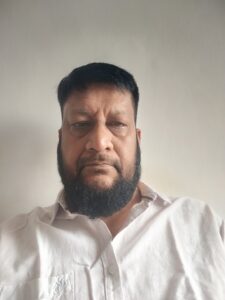
By Ahmed Sohail Siddiqui
The rise of digital journalism in India has created a new class of media personalities who emerged not from elite English-language newsrooms, but from small Urdu publications, social media activism, and grassroots communication networks. Among the most discussed names in this transformation is Shams Tabrez Qasmi, founder of the multilingual news platform Millat Times.
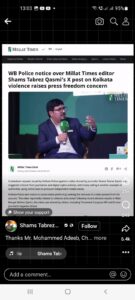
In recent days, the platform has come under national attention after the newly formed BJP government in West Bengal reportedly initiated legal action linked to content circulated on social media concerning post-election violence in the state. According to reports published by Millat Times itself, Kolkata Police issued a takedown-related notice to X (formerly Twitter) regarding a video shared by Qasmi about unrest following the 2026 Bengal Assembly elections.
The controversy has reopened larger debates surrounding independent Muslim media, digital censorship, selective enforcement of IT laws, and the changing power dynamics between regional governments and alternative news platforms.
The Journey from Urdu Newsrooms
Before becoming a recognizable face in digital Muslim journalism, Shams Tabrez Qasmi reportedly worked in Urdu media circles in Delhi, including associations with Urdu newspapers connected to veteran Urdu journalist Shahid Siddiqui. His early years were marked not by television fame or institutional journalism training, but by practical newsroom work, Urdu typography, and editorial assistance in a media ecosystem often ignored by mainstream Indian journalism.
Over time, Qasmi transitioned from traditional Urdu print culture into the rapidly expanding digital space. In 2016, he launched Millat Times as a multilingual platform publishing in Urdu, Hindi, English, and later Bengali. The portal positioned itself as a voice for issues allegedly underreported in mainstream media, particularly those concerning Muslims, communal violence, civil liberties, and minority affairs.
Millat Times describes itself as an independent platform focused on “fair and fearless journalism.” The organisation claims it seeks to highlight stories overlooked by large television networks and corporate media houses.
The Bengal Flashpoint
The immediate controversy erupted after violence and political tension followed the dramatic change of power in West Bengal, where the BJP secured a historic victory and prepared to form its first government in the state.
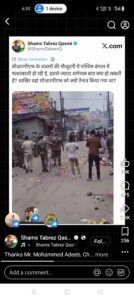
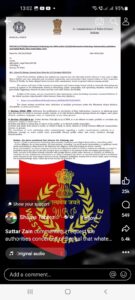
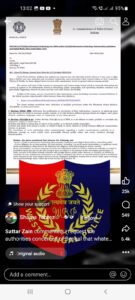
Amid widespread circulation of videos and claims relating to clashes, vandalism, and political reprisals, Qasmi shared a video on X discussing the situation in Kolkata. Soon after, according to Millat Times, Kolkata Police sent a communication to the platform X seeking action against the content, describing it as “misleading” and potentially harmful to public order.
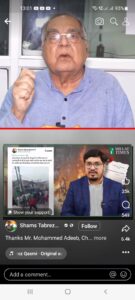
Ex-M.P. M Adeeb in Support of Shams Tabrez Qasmi
The notice reportedly invoked provisions under the Information Technology Act and IT Rules governing intermediary obligations and content moderation. Critics of the move argued that the same footage had allegedly been shared by several other public figures and political accounts, raising allegations of selective targeting.
Supporters of the police action, however, argued that authorities have a responsibility to prevent inflammatory misinformation during politically sensitive transitions. The online environment surrounding Bengal’s post-election atmosphere had already become deeply polarised, with competing narratives flooding social media platforms.
A Polarising Media Figure
Over the years, Shams Tabrez Qasmi has evolved into a sharply polarising media personality. Admirers see him as one of the few Muslim digital editors willing to confront dominant political narratives. Critics accuse him of sensationalism, ideological journalism, and emotionally charged reporting.
His platform has repeatedly faced pressure from digital corporations and authorities. Reports indicate that Facebook removed Millat Times’ page in 2021, while YouTube temporarily restricted the platform over content disputes.
At the same time, Qasmi’s supporters argue that Muslim-led independent media houses face disproportionate scrutiny compared to larger mainstream organisations aligned with dominant political narratives.
The timing of the Bengal notice also carries political significance. The BJP’s Bengal campaign prominently featured debates around the Uniform Civil Code, illegal infiltration, triple talaq, and communal identity politics. Political speeches during the campaign had already intensified communal polarisation across the state.
Against such a backdrop, digital journalists reporting on violence, communal tensions, or state actions inevitably entered a dangerous political battlefield.
The Larger Question: Journalism or Digital Activism?
The controversy surrounding Millat Times also revives an uncomfortable question facing India’s digital media ecosystem: where does journalism end and activism begin?
Unlike legacy newspapers that traditionally relied on institutional editorial structures, many digital-first outlets are personality-driven. Their identity often revolves around charismatic founders whose political opinions shape the editorial line.
This model has advantages. It allows rapid reporting, audience mobilisation, and grassroots engagement. But it also creates vulnerability. Platforms become heavily dependent on the credibility, caution, and personal conduct of a single editor.
For critics, Millat Times represents ideological journalism packaged as independent reporting. For supporters, it represents one of the few surviving Muslim-owned digital platforms capable of challenging dominant media narratives in contemporary India.
The Fear Within India’s Muslim Media Space
The legal notice against Qasmi has also triggered anxiety within India’s shrinking Urdu and Muslim media circles. Many smaller publications already struggle with financial instability, declining print readership, and pressure from advertisers and authorities.
In this climate, digital platforms like Millat Times emerged as alternatives to traditional Urdu journalism. Their growth reflects both technological transformation and the deep mistrust many minorities feel toward mainstream television news debates.
Yet the same digital visibility has made them easier targets for surveillance, platform restrictions, FIRs, and legal scrutiny.
Whether one agrees or disagrees with Qasmi’s editorial style, the Bengal episode highlights the fragile condition of independent digital journalism in India — especially journalism operating outside corporate media structures and political patronage.
Conclusion
The story of Shams Tabrez Qasmi is not merely about one journalist or one legal notice. It reflects the transformation of Indian media itself — from print to platform, from newsroom hierarchy to digital personality, and from institutional journalism to algorithm-driven influence.
A man who reportedly began in the shadows of Urdu newspaper production today runs one of the most visible Muslim digital news platforms in India. That rise has brought influence, visibility, criticism, and confrontation with state power.
The legal battle involving Millat Times and the BJP-led administration in West Bengal may ultimately become more than a dispute over one video. It could become a test case for the future boundaries of digital journalism, political dissent, and media freedom in an increasingly polarised India
Critics Within Muslim Media Also Raise Questions
The controversy surrounding Millat Times has not only drawn reactions from state authorities and free speech advocates, but has also reopened criticism from sections within India’s own Muslim media and intellectual circles.
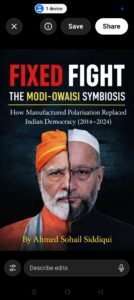
Some critics argue that Millat Times, over the past decade, consistently supported the political expansion of Asaduddin Owaisi and All India Majlis-e-Ittehadul Muslimeen (AIMIM), despite repeated warnings from rival Muslim writers and commentators who believed such politics could contribute to communal polarisation and indirectly strengthen Hindu majoritarian consolidation in several states.
This writer has, for more than a decade, publicly questioned what he describes as the “emotion-driven sectarian digital journalism” promoted by parts of the Muslim media ecosystem. According to these critics, platforms built around religious identity politics sometimes end up deepening communal divides rather than strengthening democratic engagement or institutional Muslim leadership.

Questions have also been raised by critics regarding Millat Times’ editorial promotion of controversial clerical and political personalities, including Khalilur Rahman Sajjad Nomani. Opponents accuse sections of Muslim digital media of amplifying polarising rhetoric that ultimately benefits both hardline Hindu and Muslim political narratives simultaneously.
Critics further argue that large parts of contemporary Muslim digital journalism have become increasingly personality-driven, emotionally reactive, and financially opaque, often relying on ideological mobilisation rather than traditional journalistic standards of verification, institutional accountability, and editorial neutrality.
Supporters of Millat Times reject these accusations and maintain that the platform merely provides space for marginalised Muslim voices excluded from mainstream media discourse. They argue that attacks on independent Muslim platforms are frequently politically motivated and designed to silence dissenting perspectives.
Nevertheless, the debate reflects a deeper crisis within sections of India’s minority media landscape — a struggle between advocacy, activism, religious identity, and professional journalism in an era dominated by algorithm-driven outrage and political polarisation.
*******