

Javed Khan – The man key to India
SERIES TITLE:
“The Tokyo–Lucknow Axis: Inside the Hidden Network Powering Japanese Investment in Uttar Pradesh”

By Ahmed Sohail Siddiqui
PART 1: The ₹1.5 Lakh Crore Breakthrough – What Really Happened in Japan?
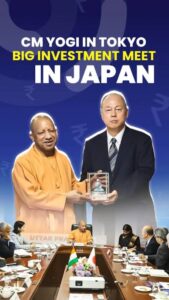
When Yogi Adityanath landed in Japan for his high-profile three-day visit, the official headlines were predictable: investment, partnership, development.
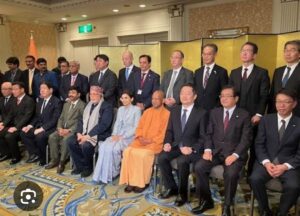
But the real story lies beneath the surface.
The Uttar Pradesh government announced investment commitments worth nearly ₹1.5 lakh crore—an unprecedented figure for a state once dismissed as economically stagnant. Meetings were held with top Japanese corporations, industrial bodies, and government-linked agencies.
Yet insiders suggest this wasn’t just diplomacy—it was the culmination of years of quiet groundwork laid by individuals operating far from public scrutiny.
- Who prepared the ground before the Chief Minister arrived?
- Who ensured doors opened at the highest levels?
This series begins where official press releases end.
—
PART 2: The Abe Doctrine – How Shinzo Abe Rewired India–Japan Relations
To understand today’s developments, one must go back to the era of Shinzo Abe.
Abe didn’t just strengthen ties with India—he personalized them. His vision of a “Special Strategic and Global Partnership” brought Japan closer to India than ever before.
But alongside official diplomacy, a parallel ecosystem emerged—informal connectors, cultural translators, and business facilitators.
It is within this ecosystem that certain lesser-known figures reportedly began playing a pivotal role—bridging political intent with corporate execution.
Were these individuals merely facilitators—or silent architects?
—
PART 3: The Man in the Middle – Decoding the Role of Javed Khan
At the heart of this emerging narrative is a name that rarely appears in official documents—but frequently in insider conversations: Javed Khan.
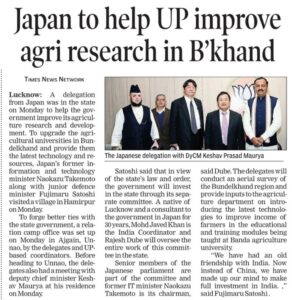
Described by sources as a Lucknow-based intermediary with deep Japanese connections, Javed Khan is said to have spent decades building trust between two vastly different worlds.
His reported credentials include:
1. Long-standing engagement with Japanese institutions
2. Cultural fluency and linguistic mastery
3. Access to both political corridors in India and corporate networks in Japan
While formal confirmation of his official status remains limited, his influence—according to multiple accounts—appears significant.
Is he a facilitator, a strategist, or something more?
—
PART 4: The Tokyo Connection – A Family Embedded in Japan
Dig deeper, and the story expands.
Javed Khan is reportedly not alone. His brother, based in Tokyo for over three decades, is said to have been involved in assisting Japanese parliamentary and business processes related to India.
This suggests not just an individual—but a family network deeply embedded in Indo-Japanese relations.
Even more striking are claims that members of this family:
1. Are fluent in Japanese
2. Have integrated into Japanese society through long-term residence
3. Have personal ties, including marriages, within Japan
If accurate, this represents a rare form of transnational influence—where identity itself becomes a diplomatic asset.
—
PART 5: Faith and Globalization – The Nadwa–Deoband Connection
Perhaps the most unexpected dimension of this story is the intersection of faith and global business.
Sources claim that Javed Khan maintains longstanding respect and connections within major Islamic institutions such as:
1. Nadwatul Ulama (Nadwa)
2. Darul Uloom Deoband
3. Networks associated with Tablighi Jamaat
This raises a fascinating question:
How does an individual rooted in traditional Islamic scholarship circles simultaneously operate within the hyper-modern, corporate culture of Japan?
Rather than contradiction, this dual identity may be the very strength that enables trust across worlds.
—
PART 6: The Yogi Strategy – Reinventing Uttar Pradesh’s Global Image
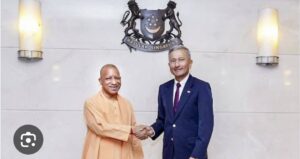
Under Yogi Adityanath, Uttar Pradesh has aggressively pursued foreign investment.
Key initiatives include:
1. Global Investors Summit
2. Sector-specific industrial policies
3. Fast-track approvals
4. Dedicated investor facilitation systems
The Japan outreach is not an isolated event—it is part of a broader strategy to reposition UP as a global manufacturing hub.
But what distinguishes this effort is its reliance not just on policy—but on relationships.
—
PART 7: Inside the Proposed Japan–UP Investment Mechanism
Reports suggest the creation—or at least the conceptualization—of structured coordination mechanisms involving:
1. Uttar Pradesh bureaucrats
2. Japanese corporate representatives
3. Cultural intermediaries
Such platforms aim to reduce friction in:
1. Regulatory approvals
2. Land allocation
3. Compliance processes
If effectively implemented, this could become a model for state-level international investment frameworks in India.
But transparency remains a key question.
—
PART 8: The Corporate Rush – Why Japan Is Betting Big on Uttar Pradesh
Why Uttar Pradesh?
Japanese corporations are reportedly drawn by:
1. Large consumer market
2. Strategic location in North India
3. Infrastructure expansion (expressways, freight corridors)
4. Policy incentives
5. Sectors of interest include:
6. Electronics manufacturing
7. Automobiles
8. Precision engineering
9. Food processing
The scale of proposed investment suggests long-term commitment—but also significant expectations.
—
PART 9: The Risks – Can Promises Become Reality?
Grand announcements often face ground realities.
Key challenges include:
1. Bureaucratic inertia
2. Land acquisition disputes
3. Infrastructure gaps
4. Cultural differences in business practices
Japanese firms are known for precision and long-term planning—qualities that sometimes clash with India’s administrative unpredictability.
The real test begins now.
—
PART 10: The Silent Architects – Redefining India’s Economic Diplomacy
As this series concludes, one truth becomes clear:
Modern economic diplomacy is no longer driven solely by governments.
It is shaped by:
1. Individuals with cross-cultural fluency
2. Informal networks of trust
3. Families that span nations
4. Quiet actors who operate outside headlines
Figures like Javed Khan—if the accounts hold—represent a new category of influence.
Not politicians. Not diplomats.
But something in between.
And perhaps, in the shadows of official power, lies the real engine of transformation.
—
Closing Note
This series is not just about Uttar Pradesh or Japan.
It is about how the world is changing—
where identities blend, networks deepen, and power quietly shifts.
To be continued next…All above 10 parts in detailed article of approx. 3000 – 4000 words each.