
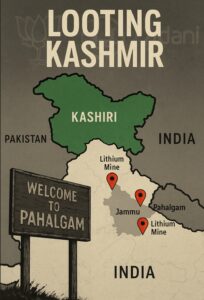
 Pahalgam Attack: A Manufactured Crisis to Facilitate the Lithium Loot in Kashmir?
Investigative Report
By Ahmed Sohail Siddiqui www.HudaTaha.com

The recent attack in Pahalgam, Kashmir—a major tourist hub—has sparked outrage across India. Yet behind the mainstream narrative of “terrorism,” deeper patterns emerge. An examination of geopolitical interests, corporate acquisitions, and historical precedents suggests that the Pahalgam attack may not be as straightforward as it appears.
It may well be a carefully orchestrated event, designed to cripple Kashmir’s economy, suppress resistance, and facilitate the silent plundering of Kashmir’s newly discovered lithium reserves—by Indian corporations backed by US and Israeli interests.
Lithium: The Hidden Wealth of Kashmir
In early 2023, the Geological Survey of India (GSI) publicly confirmed massive lithium deposits in the Reasi district of Jammu and Kashmir—estimated to be one of the largest in the world. What mainstream media barely covered, however, was how quickly corporate interests, particularly those close to the Modi government, moved into action.
Shortly after the abrogation of Article 370 in August 2019—stripping Kashmir of its constitutional protections—corporate giants like the Adani Group gained unprecedented access to land, resources, and contracts in the region. In fact, records show that subsidiaries linked to Adani have aggressively pursued stakes in mining projects across India, and confidential sources suggest a keen interest in Kashmir’s lithium fields.
Infrastructure projects, including newly sanctioned “strategic” roads, are being constructed rapidly around these lithium-rich zones—not for Kashmiri locals, but to establish extraction corridors connecting mines to major highways and ports.
Pahalgam: Targeting the Backbone of Resistance
Pahalgam, situated near sensitive mining zones, has historically been a vital center of Kashmir’s tourism economy. Unlike resource extraction, tourism revenues directly empowered local Kashmiri’s. With Pahalgam flourishing, economic resistance remained viable.
Thus, crippling Pahalgam’s tourism serves two strategic goals:
– **Economic strangulation**: Tourism-dependent families face devastation, driving Kashmiri youth into despair and reducing resistance capabilities.
– **Psychological domination**: By showcasing the vulnerability of Kashmir’s key assets, a message is sent—submit to Delhi’s new order or face ruin.
The timing is notable. Just as tourist traffic was beginning to rebound, and local entrepreneurs were finding renewed hope, the Pahalgam attack occurred—raising security fears and effectively dismantling what remained of Kashmir’s independent economy.
Echoes of the Past: False Flags and Manufactured Consent
The Pahalgam incident fits into a historical pattern of questionable “terror attacks” serving political and corporate interests in India:
– **The 2001 Indian Parliament Attack**: Widely criticized for investigative irregularities, the attack conveniently bolstered nationalist sentiment just before crucial elections and facilitated massive arms deals with the US and Israel.
– **Samjhauta Express Bombing (2007)**: Originally blamed on Pakistani elements, later investigations revealed the involvement of Hindu extremist groups, some with links to the Sangh Parivar.
– **Pulwama Attack (2019)**: Questions remain about intelligence failures and internal lapses. The incident was exploited politically to rally nationalist fervor before the general elections.
In each case, a terror event was followed by sweeping changes: militarization, arms purchases, suppression of dissent—and financial gain for defense contractors and political elites.
The Pahalgam attack appears eerily similar, except this time, the prize is not just political—it is *lithium*, a resource critical to future global supremacy.
Modi, Washington, and Tel Aviv: An Emerging Alliance
The Modi government’s increasingly close ties with Washington and Tel Aviv have strategic and economic dimensions:
– **Defense Procurement**: India has become one of the top purchasers of US and Israeli arms post-2014.
– **Resource Extraction**: Lithium’s importance in military and green technologies makes Kashmir’s reserves a top priority for global powers.
– **Corporate Convergence**: The rise of conglomerates like Adani and Ambani aligns with American and Israeli investment patterns, creating a nexus of political, military, and corporate interests.
- Under this alliance:
– The US ensures a reliable partner against China.
– Israel expands its influence in South Asia.
– India’s ruling elites secure economic and political dominance.
-
Kashmir—and its people—are collateral damage.
Roads of Extraction, Not Development
The sudden rush to build roads from lithium mining sites mirrors colonial practices. Just as the British built railways to transport cotton and minerals out of India, these new “development projects” are designed to facilitate mineral extraction—not to improve Kashmiri livelihoods.
Documents from the Ministry of Mines show that tenders and contracts are being prioritised for areas with “strategic mineral reserves,” while healthcare, education, and local employment generation lag behind.
In short: the infrastructure boom is not about development—it is about logistics for loot.
Conclusion: A New Colonialism is Here
The evidence points towards a grim reality:
The Pahalgam attack was likely not just an act of terrorism—it was a manufactured crisis. It has provided the necessary pretext to accelerate the corporate takeover of Kashmir’s resources under the guise of “security concerns.”
False flags, economic destruction, and resource plundering are not relics of history—they are unfolding right now, hidden behind the smokescreens of nationalism and counterterrorism.
The people of Kashmir are fighting not just for political rights, but for the very right to their land, their resources, and their future.
The question is: Will the world watch in silence as a new colonialism unfolds before our eyes?
—
**[End of Report]**
पहलगाम हमला: कश्मीर में लिथियम लूट को आसान बनाने के लिए रचा गया एक संकट?
खोजी रिपोर्ट
लेखक: अहमद सोहेल सिद्दीक़ी
कश्मीर का छिपा हुआ खजाना: लिथियम
2023 की शुरुआत में, भारत के भूवैज्ञानिक सर्वेक्षण विभाग (GSI) ने जम्मू और कश्मीर के रियासी जिले में विशाल लिथियम भंडार की पुष्टि की—जो विश्व के सबसे बड़े भंडारों में से एक माने जाते हैं।
मुख्यधारा की मीडिया ने शायद ही इस खबर को प्रमुखता दी, लेकिन मोदी सरकार से नजदीकी रखने वाले कॉर्पोरेट समूहों, विशेष रूप से अडानी समूह ने, तुरंत क्षेत्र में रुचि दिखाना शुरू कर दिया।
370 अनुच्छेद हटाए जाने के तुरंत बाद, अडानी जैसे कॉरपोरेट्स को कश्मीर की भूमि और संसाधनों तक पहुंच मिल गई।
रहस्यमय तरीके से, लिथियम समृद्ध क्षेत्रों के चारों ओर ‘रणनीतिक’ सड़कों का तेजी से निर्माण शुरू हो गया—कश्मीरी जनता के लिए नहीं, बल्कि खनन और परिवहन के लिए।
पहलगाम: प्रतिरोध की रीढ़ पर वार
पहलगाम, जो खनन क्षेत्रों के निकट है, कश्मीर की पर्यटन आधारित अर्थव्यवस्था का महत्वपूर्ण केंद्र रहा है।
यहां का पर्यटन स्थानीय कश्मीरियों को आर्थिक रूप से आत्मनिर्भर बनाता था।
इसलिए, पहलगाम के पर्यटन को ध्वस्त करने के दो प्रमुख उद्देश्य हैं:
आर्थिक रूप से पंगु बनाना: पर्यटन पर निर्भर परिवारों को बर्बाद कर देना, जिससे प्रतिरोध कमजोर हो।
मनोवैज्ञानिक प्रभाव: कश्मीर के महत्वपूर्ण संसाधनों की सुरक्षा को असंभव दिखाकर जनता को डराना।
जैसे ही पहलगाम में पर्यटन दोबारा पनपने लगा था, हमला हुआ—सुरक्षा के डर के कारण पूरे क्षेत्र की अर्थव्यवस्था को फिर से तहस-नहस कर दिया गया।
इतिहास से सबक: झूठे हमले और कृत्रिम डर
पहलगाम की घटना, भारत में पूर्व में हुए “संदिग्ध” हमलों की एक शृंखला का हिस्सा प्रतीत होती है:
2001 संसद हमला: जिसके बारे में जांच में भारी अनियमितताएं सामने आईं।
समझौता एक्सप्रेस बम धमाका (2007): शुरुआती तौर पर पाकिस्तान पर आरोप लगा, लेकिन बाद में हिंदुत्व चरमपंथियों की संलिप्तता सामने आई।
पुलवामा हमला (2019): खुफिया विफलताओं के सवाल आज भी बने हुए हैं।
हर घटना के बाद:
सैन्यीकरण बढ़ा,
अमेरिका और इज़राइल से हथियार खरीदे गए,
सरकार ने राजनीतिक लाभ उठाया।
अब कश्मीर में असली इनाम है—लिथियम, भविष्य की तकनीकों और हथियारों के लिए अत्यावश्यक संसाधन।
मोदी, वाशिंगटन और तेल अवीव: एक खतरनाक गठजोड़
मोदी सरकार और अमेरिका तथा इज़राइल के बीच बढ़ती नजदीकियां कई रणनीतिक और आर्थिक कारणों से हो रही हैं:
हथियार खरीदारी: भारत अब अमेरिका और इज़राइल से सबसे ज्यादा हथियार खरीदने वाला देश बन गया है।
संसाधन नियंत्रण: लिथियम जैसे संसाधन वैश्विक प्रभुत्व के लिए अनिवार्य हैं।
कॉर्पोरेट सहयोग: अडानी और अंबानी जैसे समूह अमेरिकी और इज़राइली निवेशकों के साथ गहरे जुड़े हैं।
सड़कों का निर्माण: विकास नहीं, लूट के लिए
खनन क्षेत्रों से हाईवे तक जो सड़कें बनाई जा रही हैं, उनका मकसद स्थानीय विकास नहीं, बल्कि लिथियम का तेजी से परिवहन है।
यह वही औपनिवेशिक मानसिकता है, जो ब्रिटिश राज के दौरान भारत से कपास और खनिज निकालने के लिए रेल लाइनों के निर्माण में दिखाई दी थी।
निष्कर्ष: एक नया उपनिवेशवाद
सबूत इस ओर इशारा करते हैं कि:
पहलगाम हमला केवल आतंकवाद नहीं था,
यह एक सुनियोजित साजिश थी,
जिसका लक्ष्य कश्मीर की संपदा की लूट को सुगम बनाना था।
कश्मीर के लोग अब केवल राजनीतिक अधिकारों के लिए नहीं, बल्कि अपने संसाधनों, अपनी जमीन और अपने भविष्य के लिए भी संघर्ष कर रहे हैं।
क्या दुनिया इस नए उपनिवेशवाद को चुपचाप देखती रहेगी?
********
پہلگام حملہ: کشمیر میں لیتھیم کی لوٹ مار کو آسان بنانے کے لیے ایک منظم بحران؟
تحقیقاتی رپورٹ
تحریر: احمد سوہیل صدیقی
کشمیر کی چھپی ہوئی دولت: لیتھیم
2023 کے اوائل میں، بھارت کے جیولوجیکل سروے آف انڈیا (GSI) نے جموں و کشمیر کے ریاسی ضلع میں دنیا کے سب سے بڑے لیتھیم ذخائر میں سے ایک کی دریافت کی تصدیق کی۔
مرکزی دھارے کی میڈیا نے اس خبر کو زیادہ اجاگر نہیں کیا، لیکن مودی حکومت کے قریبی کارپوریٹ گروپس، خاص طور پر اڈانی گروپ، نے فوری طور پر دلچسپی دکھائی۔
آرٹیکل 370 کے خاتمے کے بعد، اڈانی جیسے گروپوں کو کشمیر کی زمینوں اور وسائل تک بے مثال رسائی حاصل ہو گئی۔
اچانک ہی لیتھیم سے مالامال علاقوں میں “اسٹریٹجک” سڑکوں کی تعمیر تیزی سے شروع ہو گئی—کشمیری عوام کے لیے نہیں، بلکہ معدنیات کی تیزی سے نقل و حمل کے لیے۔
پہلگام: مزاحمت کی معیشت پر حملہ
پہلگام، جو کان کنی کے علاقوں کے قریب ہے، کشمیر کی سیاحتی معیشت کا اہم مرکز رہا ہے۔
یہاں کا سیاحت کا شعبہ کشمیریوں کو مالی خودمختاری فراہم کرتا تھا۔
لہٰذا، پہلگام کی سیاحت کو تباہ کرنے کے دو اہم مقاصد ہیں:
معاشی تباہی: سیاحت پر انحصار کرنے والے خاندانوں کی کمر توڑ دی جائے۔
نفسیاتی خوف: کشمیریوں کو یہ باور کرایا جائے کہ اب ان کے وسائل اور علاقے بھی غیر محفوظ ہیں۔
جیسے ہی پہلگام میں سیاحت دوبارہ بحال ہو رہی تھی، حملہ کر کے ایک بار پھر معیشت کو برباد کر دیا گیا۔
تاریخ کا سبق: جھوٹے حملے اور پیدا کیا گیا خوف
پہلگام حملہ بھارت میں پہلے ہونے والے متنازعہ حملوں کی ایک کڑی محسوس ہوتا ہے:
2001 بھارتی پارلیمنٹ حملہ: جس کی تحقیقات میں کئی سوالات اٹھے۔
سمجھوتہ ایکسپریس بم دھماکہ (2007): ابتدائی طور پر پاکستان پر الزام لگایا گیا، مگر بعد میں ہندوتوا شدت پسندوں کا کردار سامنے آیا۔
پلوامہ حملہ (2019): آج تک انٹیلی جنس ناکامی پر سوالات موجود ہیں۔
ہر حملے کے بعد:
عسکری اخراجات میں اضافہ،
امریکہ اور اسرائیل سے اسلحہ کی خریداری،
حکومت کی سیاسی مضبوطی۔
اب کشمیر میں اصل انعام ہے—لیتھیم، جو مستقبل کی ٹیکنالوجی اور اسلحہ سازی کے لیے بنیادی اہمیت رکھتا ہے۔
مودی، واشنگٹن اور تل ابیب: ایک خطرناک گٹھ جوڑ
مودی حکومت اور امریکہ و اسرائیل کے درمیان بڑھتی ہوئی قربت کئی حکمت عملی اور معاشی وجوہات رکھتی ہے:
اسلحہ کی خریداری: بھارت اب دنیا کا سب سے بڑا امریکی و اسرائیلی اسلحہ خریدار ہے۔
وسائل پر قبضہ: لیتھیم جیسا اہم قدرتی ذخیرہ عالمی غلبے کے لیے ضروری ہے۔
کارپوریٹ گٹھ جوڑ: اڈانی اور امبانی جیسے گروپ بین الاقوامی سرمایہ داروں کے ساتھ گہرے روابط رکھتے ہیں۔
سڑکوں کی تعمیر: ترقی نہیں، لوٹ مار کے لیے
لیتھیم کی کانوں سے لے کر بندرگاہوں تک جو سڑکیں تعمیر کی جا رہی ہیں، وہ مقامی ترقی کے لیے نہیں بلکہ وسائل کی تیز نقل و حمل کے لیے بنائی جا رہی ہیں۔
یہ بالکل ویسا ہی ہے جیسا برطانوی راج کے دور میں ہندوستان سے وسائل نکالنے کے لیے ریلیں بچھائی گئی تھیں۔
نتیجہ: ایک نیا نوآبادیاتی دور
ثبوت اس بات کی طرف اشارہ کرتے ہیں کہ:
پہلگام حملہ صرف دہشت گردی نہیں تھا،
بلکہ ایک منظم سازش تھی،
جس کا مقصد کشمیر کے قدرتی وسائل کو لوٹنا ہے۔
کشمیری عوام اب صرف سیاسی آزادی کے لیے نہیں بلکہ اپنے وسائل، زمین اور مستقبل کے لیے بھی لڑ رہے ہیں۔
کیا دنیا خاموش تماشائی بنی رہے گی؟
********