
Is the Current Escalation a Geopolitical Power Struggle — or an Undeclared War on Islam?

By Ahmed Sohail Siddiqui
Across large sections of the Muslim world, a growing narrative holds that recent escalations involving Iran, Israel, the United States, and allied nations are not merely geopolitical — but represent a broader assault on Islamic dignity, sovereignty, and leadership.
This perception did not emerge in a vacuum.
It has roots in decades of war, intervention, sanctions, rhetoric, and asymmetrical power structures.
The Symbolism of Leadership
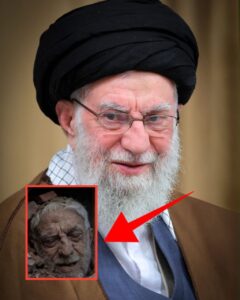
For many Muslims, Ayatollah Ali Khamenei is not viewed solely as a political figure. Within Shia-Sunni tradition, he is regarded as a Sayyid — a descendant of Prophet Muhammad (peace be upon him). That lineage carries profound symbolic weight.
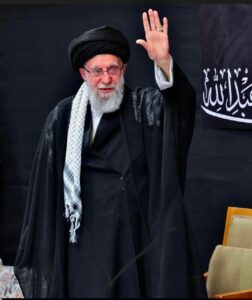
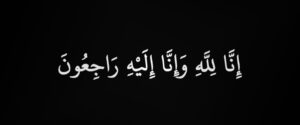
When a leader perceived as part of the Prophet’s family becomes central to confrontation with Western powers, the conflict acquires emotional and religious dimensions far beyond ordinary state rivalry.
Even if military planners frame actions in strategic terms, public perception may interpret them through sacred identity.
In conflicts where identity and sovereignty intersect, symbolism can be as powerful as policy.

The US Security Architecture in the Muslim World
The United States maintains:
- Military bases across the Gulf
- Deep defense agreements with Saudi Arabia, UAE, Qatar, Bahrain
- Strategic ties with Egypt and Jordan
- Expanding cooperation with India
- Unconditional security backing of Israel
From Washington’s perspective, this is a network designed to:
- Protect shipping lanes
- Secure energy supply
- Counter adversaries
- Maintain regional stability
- Contain Iran
From another perspective — widely held among critics — this architecture resembles strategic dominance, where Muslim-majority states operate within parameters shaped by US defense priorities.
The truth likely lies between “colonial capture” and “equal partnership.” These states retain sovereignty, but their security doctrines are heavily intertwined with US systems, weapons, intelligence, and financial networks.
Dependency can exist without formal colonialism.
The Question of Unity
The idea that Muslim states must “detach from US influence” to regain autonomy reflects frustration with fragmentation within the Organisation of Islamic Cooperation (OIC).
However, geopolitical reality shows:
- Saudi Arabia and UAE pursue pragmatic security ties.
- Turkey balances NATO membership with independent ambitions.
- Pakistan navigates IMF dependence and Gulf support.
- Indonesia and Malaysia avoid military blocs.
Iran positions itself as resistance leadership.
The Ummah may be spiritually unified, but state interests diverge sharply.
That divergence limits collective military action.
Islamophobia in Western Democracies
There is credible documentation that:
- Islamophobic rhetoric exists within segments of Western politics.
- Hate crimes against Muslims rise during geopolitical crises.
- Media framing can conflate militancy with faith identity.
However, Western democracies are not monolithic.
They also contain:
- Millions of Muslim citizens.
- Muslim elected officials.
- Muslim-majority neighborhoods.
- Civil rights protections (uneven, but real).
- Courts that have overturned discriminatory policies.
Thus, while Islamophobia exists as a social and political phenomenon, it is not formally codified as state war doctrine.
That distinction matters analytically.
Iran’s Position
- Iran has positioned itself as defender of:
- Palestinian resistance.
- Anti-Zionist ideology.
- Regional resistance networks.
- Multipolar order against US dominance.
Supporters interpret this as defense of Muslim dignity. Critics interpret it as regional expansionism.
Both interpretations coexist globally.
China and Russia
China and Russia’s alignment with Iran is widely understood as strategic balancing against US power — not theological solidarity.
China seeks:
- Energy security.
- Reduced US hegemony.
- Multipolar leverage.
- Russia seeks:
- NATO counterweight.
- Middle East influence.
- Strategic bargaining power.
Neither state frames its support in religious terms.
Is This an Undeclared War on Islam?
For a conflict to be classified as a war on a religion, we would expect:
- Official doctrinal statements targeting the faith itself.
- Coordinated action against all Muslim-majority states.
- Broad religious persecution policy as strategic objective.
- That is not formally documented.
What does exist is:
- Intense hostility toward specific governments and armed groups.
- Longstanding support for Israel’s security.
- Military containment of Iran.
- Polarizing rhetoric from political leaders on multiple sides.
The danger lies not in official declarations — but in narrative escalation.
If enough populations begin interpreting events as civilizational war, political leaders may be forced into positions that make de-escalation impossible.
The Crossroads
We are observing:
- Power rivalry between blocs.
- Deep symbolic grievances.
- Fragmented Muslim political leadership.
- Rising global polarization.
This can evolve in two directions:
1. Managed geopolitical confrontation
2. Identity-driven global polarization
The second would destabilize not just the Middle East, but Muslim minorities globally and international economic systems.
********